Unleashing the Flow: “If Only We Had Taller Been” – A Ray Bradbury Poem
The Literary Legacy of Ray Bradbury: From Futurism to Poetry

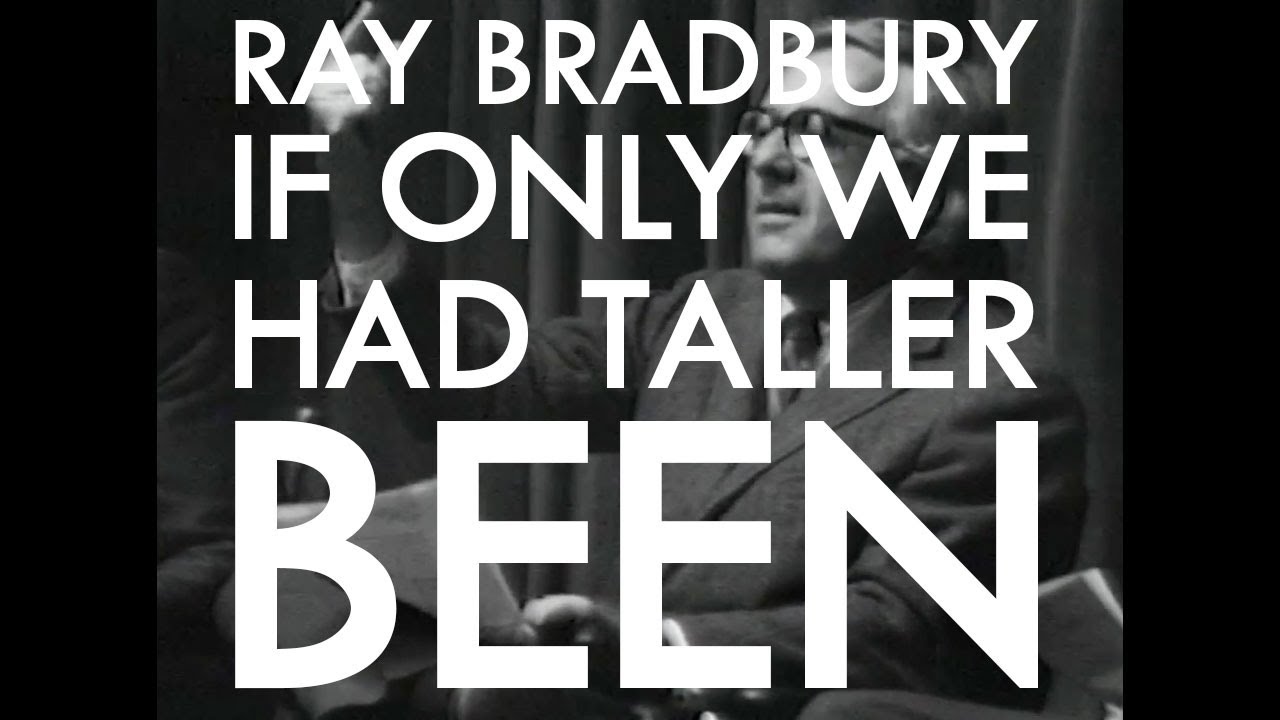
"I have never listened to anyone who criticized my taste in space travel, sideshows or gorillas. When this occurs, I pack up my dinosaurs and leave the room."
— Ray Bradbury, Zen in the Art of Writing: Releasing the Creative Genius Within You
Ray Bradbury’s Creative Philosophy and Poetic Genius
Ray Bradbury, who passed away at age 91, was the 20th-century American short-story writer par excellence. While best known for iconic novels like the science-fiction dystopia Fahrenheit 451 (1953) and the dark fantasy Something Wicked This Way Comes (1962), his artistic reach extended far wider. He was a prolific creator of children’s books, plays, screenplays, and poetry.
Today, Ray Bradbury is celebrated as the ultimate master of speculative fiction. Yet, his timeless writing advice remains an overlooked treasure trove for budding authors worldwide.
While famous for his sci-fi masterpieces, Bradbury’s deep relationship with poetry and raw creative flow offers the perfect cure for modern writers’ block. By looking past his prose into his rhythmic, instinctual philosophy, writers can learn to stop overthinking, ignore the critics, and let their subconscious take the lead.
Dive Into Bradbury's Own Verse
Though recognized for Fahrenheit 451 Ray Bradbury Wikipedia, you can explore his lyrical side in poetry collections like: If Only We Had Taller Been
Ray Bradbury
If Only We Had Taller Been
The fence, we walked between the years
Did bounce us serene.
It was a place half in the sky where
In the green of leaf and promising of peach
We'd reach our hands to touch and almost touch the sky,
If we could reach and touch, we said,
‘Twould teach us, not to, never to, be dead.
We ached and almost touched that stuff;
Our reach was never quite enough.
If only we had taller been,
And touched God's cuff, His hem,
We would not have to go with them
Who've gone before,
Who, short as us, stood tall as they could stand
And hoped by stretching, tall, that they might keep their land,
Their home, their hearth, their flesh and soul.
But they, like us, were standing in a hole.
O, Thomas, will a Race one day stand really tall
Across the Void, across the Universe and all?
And, measured out with rocket fire,
At last put Adam's finger forth
As on the Sistine Ceiling,
And God's hand come down the other way
To measure man and find him Good,
And Gift him with Forever's Day?
I work for that.
Short man, large dream, I send my rockets forth
between my ears,
Hoping an inch of Good is worth a pound of years.
Aching to hear a voice cry back along the universal Mall:
We've reached Alpha Centauri!
We're tall, O God, we're tall!
Bradbury’s Books on Goodreads
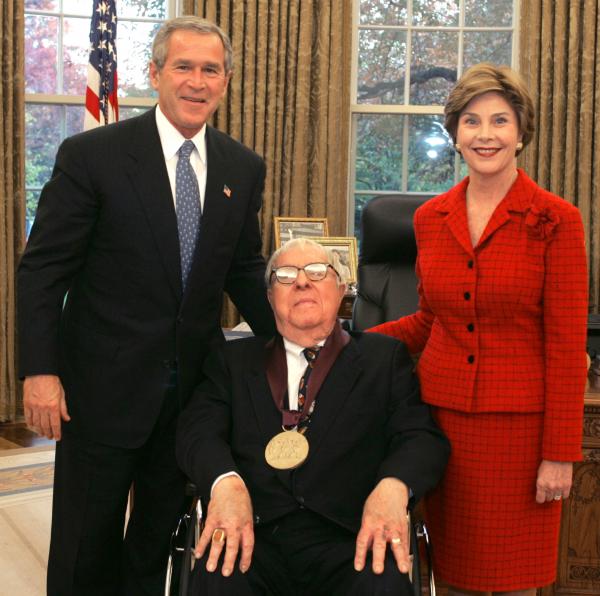
Photo: President George W. Bush and Laura Bush present the National Medal of Arts award to Ray Bradbury. White House photo by Susan Sterner.
Meta Data
Summary: Ray Bradbury (1920–2012) was a legendary American author who bridged the gap between speculative fiction and mainstream literature. Best known for Fahrenheit 451 and The Martian Chronicles, his works masterfully blended science fiction, fantasy, and horror while exploring deep themes of censorship and nostalgia.

- A New Beginning: Ratnanagar Becomes a 'Street-Dependent Person Free' City
- Mechi-Mahakali National Rescue Journey 2026 | 9 Exclusive Images
- Mechi-Mahakali Rescue Day 10: 117 Street People Rescued
- Ani Choying Drolma: In the Eyes of the Lotus
- Mechi-Mahakali Rescue Journey Update: 5 people rescued from Rupandehi under the protection of Manavsewa Ashram